
How to Size a Water Heater for Your Property
Buying the biggest water heater available isn’t always the smart move, and buying one too small guarantees daily frustration.
To size a water heater correctly, you must match the unit to your household’s peak demand. For traditional tank heaters, this means calculating the “First-Hour Rating” (the number of gallons you use during your busiest hour). For tankless heaters, you must calculate your “Peak Flow Rate” (Gallons Per Minute) and combine it with your local groundwater temperature.
Use our charts below to find the exact size you need, or read on to understand the math behind the recommendation.
Water Heater Sizer
Sizing Factor | Value | Engineering Context |
Occupancy Load | 2 People | Determines storage volume |
Peak Water Demand | 2.5 GPM (Showers) | Determines heating speed |
Appliance Load | Standard | Adds flow & volume margin |
System: Tank | 40 Gallons | Storage Capacity Spec |
System: Tankless | 2.5 GPM | Minimum Flow Rate Spec |
Sizing a Traditional Tank Water Heater
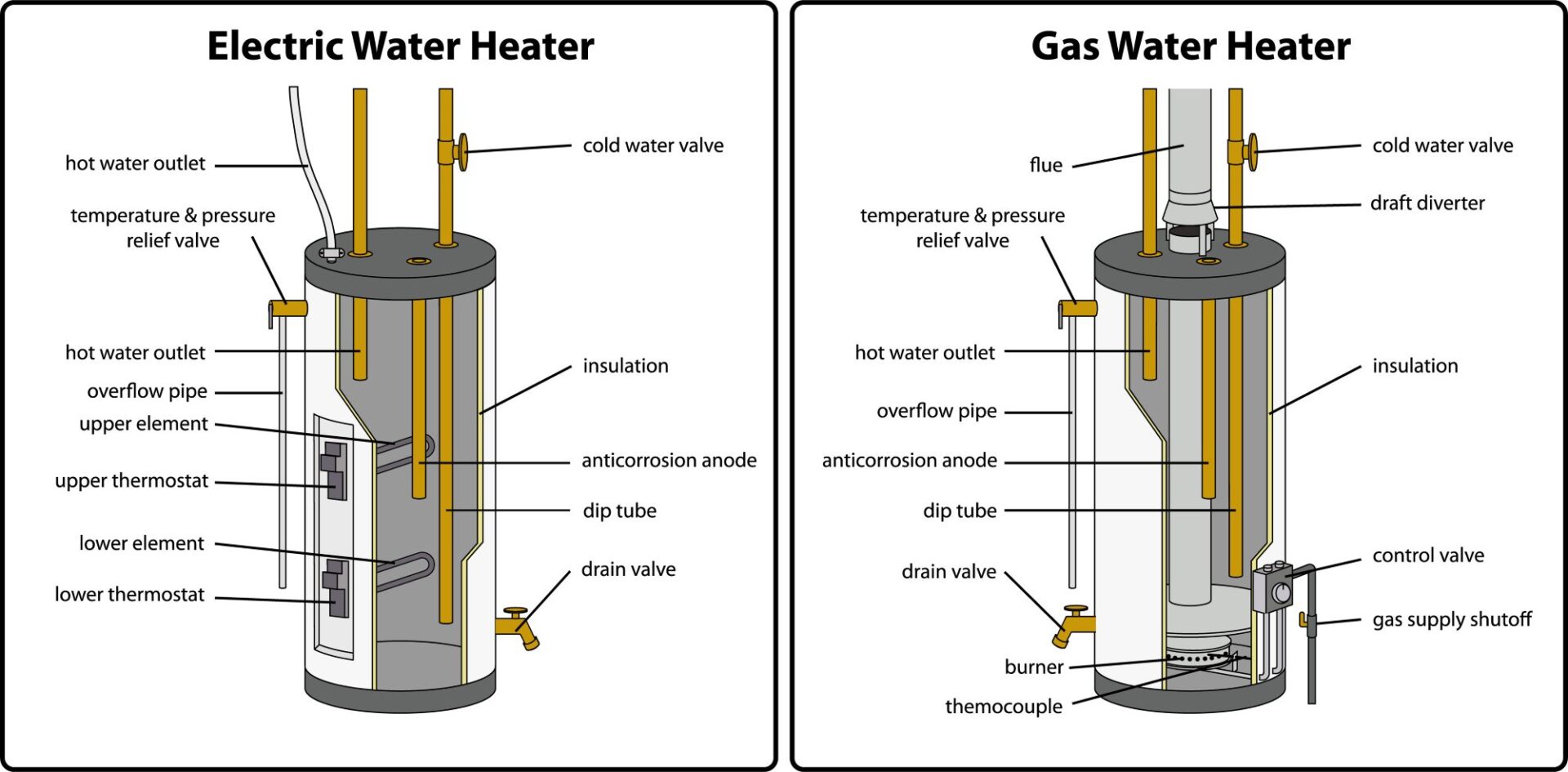
Traditional tank water heaters are measured by their physical capacity (gallons) and their First-Hour Rating (FHR). The FHR is printed on the yellow EnergyGuide label and tells you exactly how much hot water the unit can supply in one hour starting with a full tank.
To size a tank properly, calculate the hour of the day your family uses the most hot water.
The Peak Demand Calculation
Here is how much water standard household activities consume:
Shower: 20–25 gallons (per shower)
Washing Machine: 25–40 gallons (per load)
Dishwasher: 5–10 gallons (per load)
Shaving / Hand Washing: 2–4 gallons
If your morning routine involves two consecutive showers while the dishwasher runs, your peak demand is roughly 60 gallons. You need a tank with a First-Hour Rating that meets or exceeds 60 gallons.
General Tank Sizing Guide
If you prefer a quick estimate based on household size:
Household Size | Recommended Tank Capacity |
1 to 2 People | 30 to 40 Gallons |
2 to 3 People | 40 to 50 Gallons |
3 to 4 People | 50 to 60 Gallons |
5+ People | 75+ Gallons |
Sizing a Tankless Water Heater
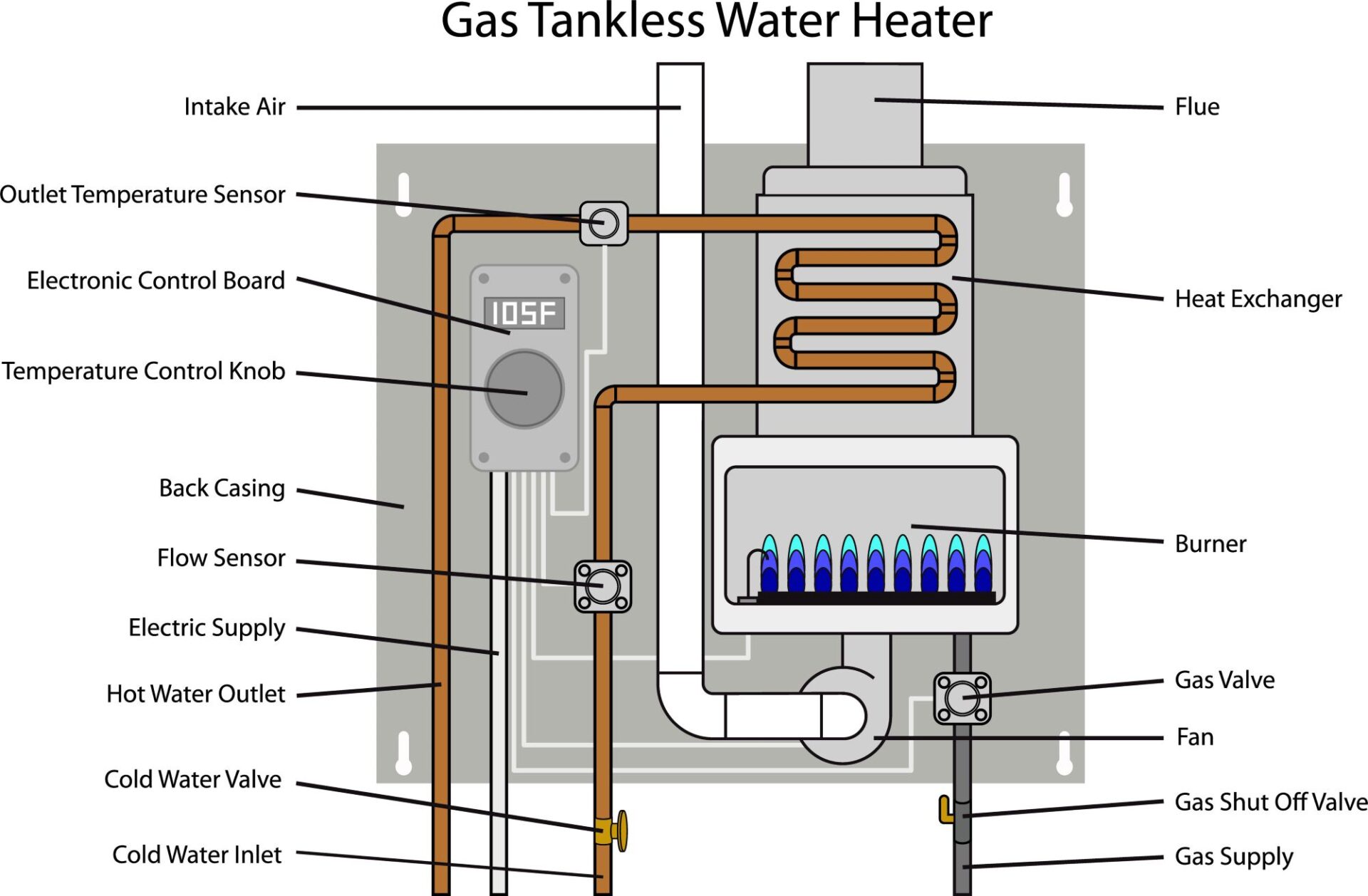
Tankless water heaters do not store water, meaning gallon capacity is irrelevant. Instead, they are sized by two critical factors: Flow Rate and Temperature Rise.
1. Calculate Your Peak Flow Rate (GPM)
Flow rate is measured in Gallons Per Minute (GPM). Add up the flow rates of all the fixtures you expect to run simultaneously.
- Standard Showerhead: 2.5 GPM
- Kitchen Faucet: 2.0 GPM
- Dishwasher: 1.5 GPM
If you want to run two showers (5.0 GPM) and the dishwasher (1.5 GPM) simultaneously, you need a unit rated for at least 6.5 GPM.
2. The Utah “Temperature Rise” Penalty
This is the single biggest mistake homeowners make when relying on national sizing guides.
Temperature rise is the difference between the cold water entering your house and your desired hot water temperature (usually 120°F). In Utah, our winter groundwater temperatures get exceptionally cold—often dropping down to 40°F.
- Desired Temp (120°F) – Winter Groundwater (40°F) = 80°F Temperature Rise
If you buy a tankless unit rated for 7.0 GPM, but that rating is based on a warm-weather state like Florida (which only requires a 30°F temperature rise), that same unit might only output 3.5 GPM during a freezing Utah winter. Always ensure the tankless unit you select can handle your peak GPM demand, specifically at an 80°F temperature rise.
Professional Sizing and Installation
Calculating peak demand, flow rates, and winter temperature drops can get complicated. If you are tired of running out of hot water or are looking to upgrade to a high-efficiency system, the team at Plumbing Utah can help. We evaluate your home’s fixture count, incoming water lines, and household habits to recommend the perfect unit.
(801) 601-1298
Call Today
Search

How to Size a Water Heater for Your Household Tank & Tankless
How to Size a Water Heater for Your Property Buying the biggest water heater available isn’t always the smart move, and buying one too small

Why Does My Basement Smell Like Sewage After a Heavy Rain?
The Quick Answer (TL;DR): If your basement smells like a sewer after heavy rain, the sudden influx of water has altered the pressure in your

Essential Plumbing Maintenance for Salt Lake Restaurants
The Bottom Line (Quick Answer for Restaurant Managers): To prevent unexpected plumbing closures in a commercial kitchen, managers must prioritize four regular maintenance tasks: quarterly
Sizing a Traditional Tank Water Heater
Traditional tank water heaters are measured by their physical capacity (gallons) and their First-Hour Rating (FHR). The FHR is printed on the yellow EnergyGuide label and tells you exactly how much hot water the unit can supply in one hour starting with a full tank.
Sizing a Tankless Water Heater
Tankless water heaters do not store water, meaning gallon capacity is irrelevant. Instead, they are sized by two critical factors: Flow Rate and Temperature Rise.
Categories
- Appliances
- Backflow Prevention
- Basement Leaks
- Bathroom
- Bidets
- Boilers
- Calcium Buildup
- Community
- Company
- Company News
- Contest
- Drain Cleaning
- Emergency
- Faucet
- French Drains
- Frozen Pipes
- Garbage Disposals
- Hard Water
- Holidays
- Home Upgrades
- Hot Water System
- Hydro Jetting
- Kitchen
- Leak Detection
- Maintenance
- Money
- Nightmares
- Older Home Plumbing
- Plumbing
- PRV
- Repipe
- Restaurant Plumbing
- Rust
- Septic Tanks
- Service
- Service Call
- Sewage Ejector Pumps
- Sewer Clog
- Sewer Main Line
- Sewer Repair
- Sump Pumps
- Swimming Pool Leak Detection
- Swimming Pool Repair
- Tankless Water Heaters
- Teaching
- Thanksgiving
- Tips
- Toilet Plumbing
- trench less water line installation
- trench-less water line repair
- Trenchless
- trenchless water line repair
- trenchless water main installation
- Water
- Water Filtration
- Water Heater
- Water Heater Installations
- Water Levels
- Water Pressure
- Water Softeners