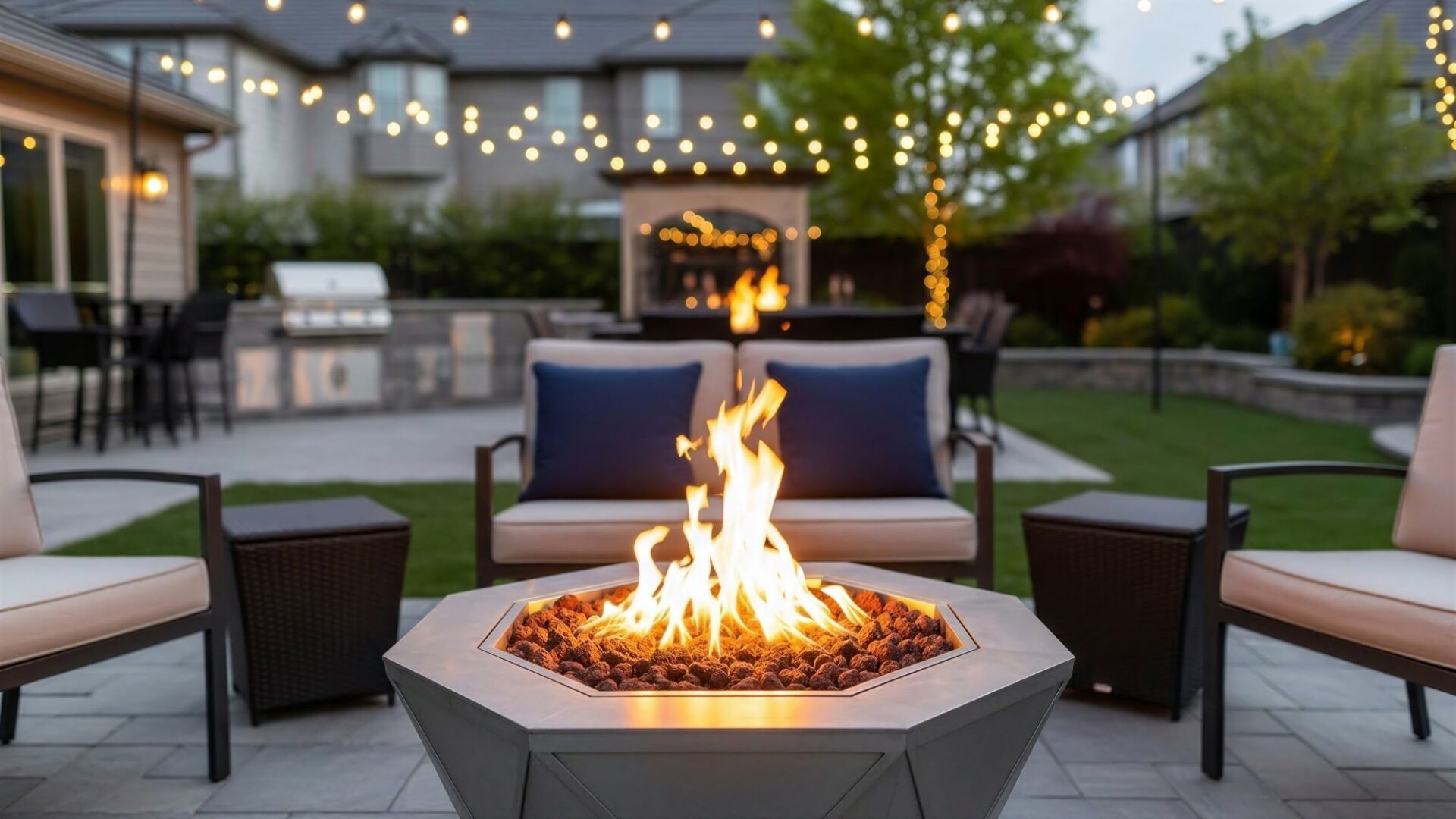
As the weather cools down along the Wasatch Front, Utah homeowners flock to their backyards to enjoy crisp evenings. Whether it is roasting marshmallows over a custom fire pit, hosting a neighborhood BBQ with a built-in outdoor kitchen, or warming up under patio heaters, natural gas makes outdoor living seamless.
But when it’s time to upgrade your backyard, a common question stops many homeowners in their tracks: Whom do you call to install an outdoor gas line?
The answer may surprise you: You call a licensed plumber.
While most people associate plumbers strictly with water leaks and clogged drains, licensed plumbing contractors are the primary professionals trained, certified, and equipped to run, repair, and install natural gas lines.
Here is everything you need to know about outdoor gas line installation, why plumbers are the right professionals for the job, and how to prepare your backyard for the ultimate outdoor upgrade.
Key Takeaways (The Quick Answers)
- Who installs gas lines? Licensed plumbing contractors are trained, legally certified professionals who install natural gas and propane lines.
- Do I need a permit? Yes. Running new gas lines requires proper permits and city inspections to ensure strict safety codes are met.
- Can I do it myself? No. Due to the extreme risks of gas leaks, fire, and explosion, gas line installation is never a DIY project.
- What can be connected? Outdoor kitchens, built-in BBQs, fire pits, patio heaters, and pool heaters.
Why Plumbers Handle Natural Gas Lines
Many people think you need to call the utility company, an HVAC tech, or a specialty “gas company” to run a line for a new fire pit.
In reality, plumbing includes installing pipes that route fluids and gases throughout a structure. The same principles of pressure, flow, sealing, and pipefitting that apply to water lines also apply to gas lines.
When you hire a licensed plumbing contractor for your outdoor gas project, you are getting a professional who knows how to:
- Calculate BTU Requirements: Ensuring your new outdoor grill and your indoor water heater can run simultaneously without a drop in gas pressure.
- Select the Right Materials: Knowing when to use black iron pipe (indoors/above ground) versus flexible corrugated stainless steel tubing (CSST) or yellow polyethylene (PE) pipe for underground trenching.
- Perform Pressure Testing: A crucial safety step where the line is capped and pressurized with air to detect even microscopic leaks before introducing natural gas.
Popular Outdoor Gas Line Installations
1. Built-In BBQs and Outdoor Kitchens
Tired of running out of propane halfway through grilling steaks? Connecting your grill directly to your home’s natural gas supply means you will never have to swap a heavy tank again. An outdoor kitchen requires precise gas line routing to fit seamlessly behind masonry or cabinetry. A plumber will ensure the shut-off valves are safely accessible but aesthetically hidden.
2. Custom Fire Pits
A natural gas fire pit provides instant ambiance with the flip of a switch—no chopping wood, no lingering smoke smell, and no ashes to clean up. Because fire pits are often located in the middle of a yard or patio, a plumber will need to trench the gas line underground, ensuring it is buried at the code-compliant depth (typically 12 to 18 inches) and protected from landscaping hazards.
3. Patio Heaters
To extend the Utah outdoor season into late fall and early spring, permanent patio heaters are a game-changer. Instead of bulky freestanding propane heaters, plumbers can run discreet gas lines through your patio framing or walls to power sleek, mounted radiant heaters.
The Gas Line Installation Process: What to Expect
If you are planning an outdoor renovation, it is best to bring a plumber in before the concrete is poured or the landscaping is finished. Here is how the process generally works:
Step 1: Capacity and Routing Assessment
Before running a single pipe, a plumber must assess your home’s current gas meter capacity. Every appliance in your home (furnace, water heater, stove) draws a specific amount of BTUs (British Thermal Units). The plumber will calculate if your existing system can handle the additional load of a 90,000 BTU fire pit or if the meter/main line needs an upgrade.
Step 2: Trenching and Laying Pipe
For backyard features, the plumber will map out the safest route from your home’s gas manifold to the outdoor appliance. This usually involves digging a trench. The plumber lays specialized underground gas piping (like Polyethylene), along with a tracer wire so utility locators can locate the non-metallic pipe in the future.
Step 3: Pressure Testing
This is the most critical step. Before burying the trench, the plumber fills the new line with compressed air and attaches a pressure gauge. The line must hold a specific pressure for a set amount of time. If the dial drops even a fraction, the plumber must fix the leak.
Step 4: Inspection and Connection
Once the line passes the pressure test, the city inspector will sign off on the permit. Only then will the plumber connect the new line to your home’s active gas supply and your new outdoor appliance.
Frequently Asked Questions (FAQ)
How much does it cost to run a gas line for an outdoor fire pit?
The cost varies heavily based on the distance from the gas source to the fire pit, the complexity of the trenching (e.g., digging through dirt vs. cutting through concrete), and local permit fees. Because every home is different, a professional on-site estimate is always required.
Is natural gas cheaper than propane for outdoor grills?
Yes. On average, natural gas is significantly more cost-effective per BTU than buying exchangeable propane tanks. Plus, you pay for exactly what you use through your utility bill, rather than wasting the last bit of gas left in a tank you exchange.
Can I run my own gas line underground?
Absolutely not. In Utah (and virtually everywhere else), running gas lines requires a licensed professional. An improperly installed gas line can lead to catastrophic explosions, fires, and carbon monoxide leaks. Also, unpermitted DIY gas work can void your homeowner’s insurance and cause major issues when you try to sell your home.
Ready to Upgrade Your Backyard?
Whether you are building the ultimate outdoor kitchen or want the convenience of a natural gas fire pit, do not leave your family’s safety to chance. Hiring a licensed, local plumbing expert ensures your new outdoor oasis is efficient, up to code, and entirely safe.