For a Utah household of six or more, a standard 40- or 50-gallon water heater will run out of hot water before the third person finishes their morning shower. To guarantee back-to-back showers without pressure drops, a family of six needs either a 75- to 100-gallon standard tank or a high-capacity tankless water heater rated for 9 to 11 GPM (Gallons Per Minute).
The secret to ending the morning cold-water wars isn’t just buying a “bigger” unit. It requires calculating capacity based on Utah’s specific climate conditions.
Why Utah Winters Change the Math: The Temperature Rise Factor
When sizing a water heater for a large family, national averages don’t apply in Utah. The defining metric is Temperature Rise—the amount of heat the unit must add to incoming city water to reach a comfortable shower temperature of 105°F to 110°F.
In warmer southern states, groundwater might enter the home at 70°F, so the heater only needs to raise the temperature by 35 degrees. During a freezing Utah winter, water traveling through pipes buried in cold ground routinely enters your home at 40°F or lower.
Your water heater must heat that water by 70+ degrees on demand. This drastic temperature rise severely impacts how much hot water any system can produce per minute. If you don’t factor in Utah’s winter groundwater temperatures, your new system will underperform when you need it most.
Sizing a Tankless Water Heater for 6+ People
Tankless water heaters are ideal for large families because they heat water on demand, meaning the hot water supply is virtually endless. However, they are limited by Flow Rate (GPM). If too many fixtures run at once, the heater cannot heat water fast enough, causing pressure or temperature drops.
To size a tankless unit, calculate your peak concurrent morning usage:
- Shower 1: 2.0 GPM
- Shower 2: 2.0 GPM
- Kitchen Sink (Breakfast dishes): 1.5 GPM
- Total Peak Demand: 5.5 GPM
The Utah Recommendation: Because of the extreme winter temperature rise, an 11 GPM unit may only produce 6 or 7 GPM of fully heated water in January. A household of 6+ needs a high-capacity tankless unit that can deliver 9 to 11 GPM. For luxury homes running three showers and a washing machine simultaneously, plumbers often install two tankless units in parallel to double the output.
Sizing a Standard Tank Water Heater for 6+ People
Standard tank water heaters remain highly reliable and cost-effective. They provide a large volume of hot water at once without pressure drops, but require recovery time once the tank runs dry.
When shopping for a tank, the gallon capacity is secondary to the First Hour Rating (FHR). According to the U.S. Department of Energy’s sizing guidelines, the FHR indicates how many gallons of hot water the heater can deliver in a single hour, starting with a fully heated tank.
The Utah Recommendation: A family of six requires an FHR of 100+ gallons. You need at least a 75-gallon tank, though a 100-gallon tank (or two 50-gallon tanks plumbed together) is the industry standard for guaranteed comfort in a house of this size.
The Mixing Valve Hack for Smaller Utility Rooms
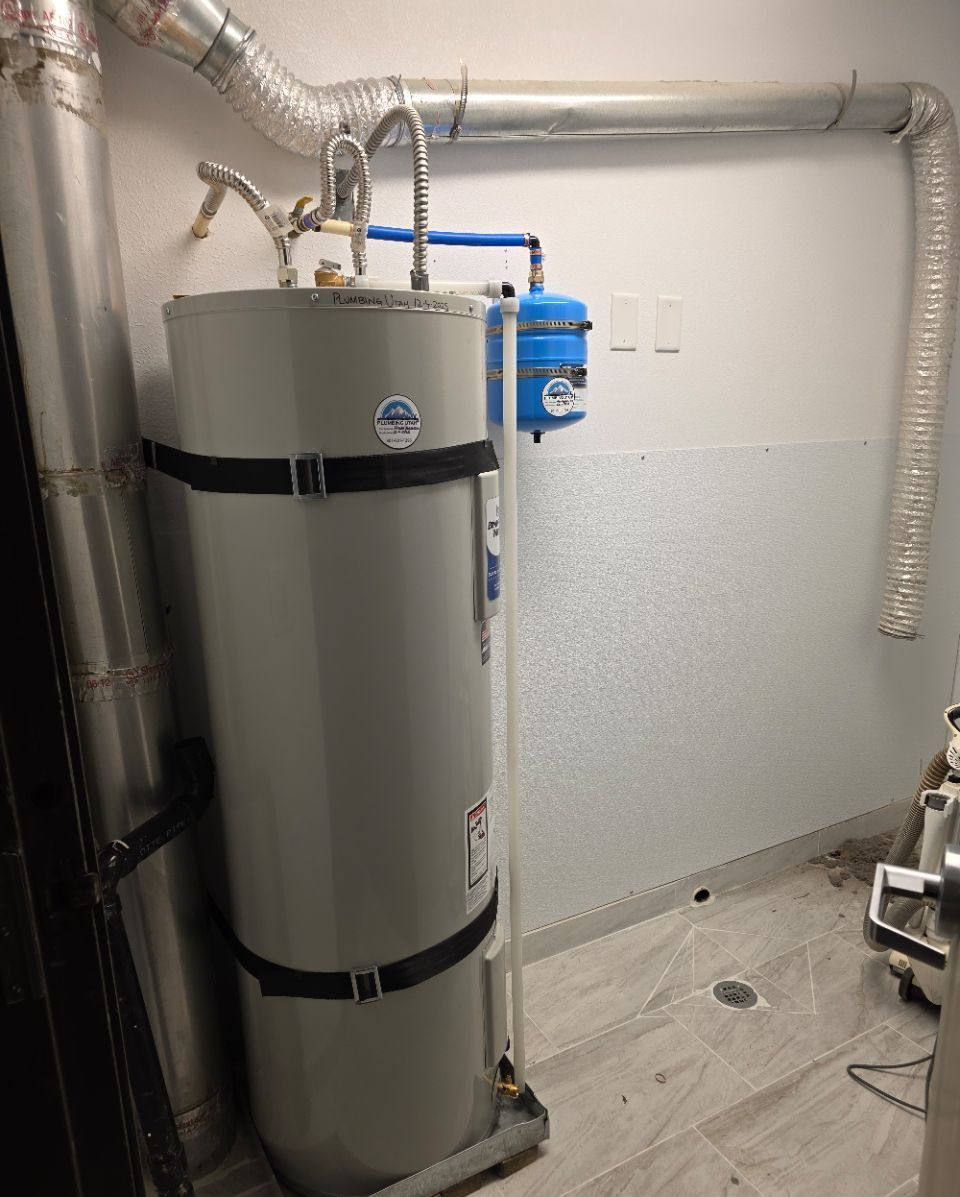
If your mechanical room doesn’t have the physical space for a massive 75-gallon tank, use a Thermostatic Mixing Valve.
A plumber installs this valve directly above your standard water heater and sets the tank thermostat to a scalding 140°F. The valve automatically mixes cold water into the hot line as it leaves the tank, delivering a safe 120°F to your faucets. Because the water inside the tank is stored at a much higher temperature, it depletes much more slowly, effectively making a 50-gallon tank perform like a 70-gallon tank.