What Is the “Burrito Method” for French Drains?
If you’ve ever had a yard drainage system fail after just a couple of years, you know the frustration of watching your property flood all over again. Traditional drainage trenches often fail because surrounding soil and silt wash into the gravel, clogging the vital gaps where water is supposed to flow.
At Plumbing Utah, we prevent these failures by relying on the industry gold standard for water management: The Burrito Method.
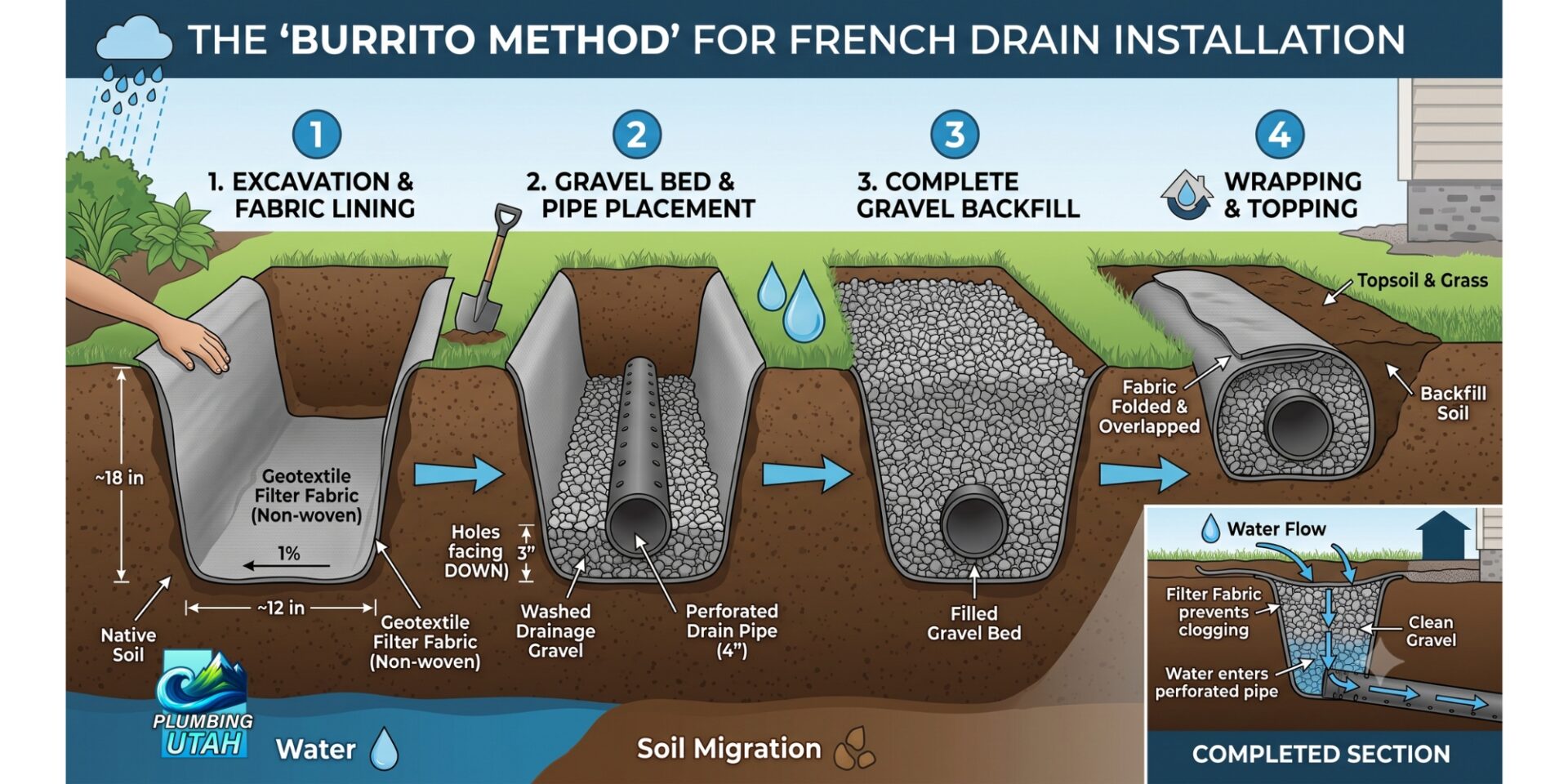
The Burrito Method involves creating a sealed filter envelope around the entire drainage system. Instead of simply dumping gravel and a perforated pipe into a trench, the entire trench is lined with a specialized non-woven geotextile fabric. After laying the pipe and surrounding it with clean gravel, the fabric is folded over the top—wrapping the system just like a burrito.
This creates a highly effective, permeable barrier that lets water enter freely while keeping native dirt completely out.
Why Traditional Drainage Trenches Fail in Utah
Utah’s diverse soil composition—ranging from heavy clay to loose sand—can be a nightmare for underground plumbing and drainage. During heavy summer rainstorms and monsoons, water carries fine sediment directly into unprotected trenches.
When a drain isn’t wrapped properly:
- Silt Migration: Mud and soil particles wash into the drainage gravel.
- Clogged Pathways: The gravel loses its void space, meaning water has nowhere to flow.
- Pipe Blockage: Sediment enters the perforated pipe, eventually stopping water movement entirely.
- System Failure: Hydrostatic pressure builds up, leading to yard flooding or severe foundation damage.
How We Install the Burrito Method
To ensure your drainage system lasts for decades, we follow a strict procedural layout for maximum water diversion:
1. Excavation and Grading
The trench is dug with a precise downward slope (at least a 1% grade) to ensure gravity pulls the water away from your foundation or problem area.
2. The Geotextile Fabric Lining
We line the bottom and sides of the trench with a heavy-duty, non-woven geotextile fabric. We leave enough excess fabric on the sides to fold over the top later. (Note: Standard landscaping weed fabric is never used, as it is not designed for high water flow and will quickly clog.)
3. The Gravel Bed and Pipe
A base layer of clean, washed drainage gravel goes in first. Next, a rigid perforated drain pipe is laid with the holes pointing down. This allows rising water to enter the pipe immediately and flow away efficiently.
4. Wrapping the “Burrito”
The pipe is covered with more washed gravel until the trench is nearly full. Finally, the excess fabric is folded over the top of the gravel, overlapping the edges to seal the system completely.
5. Backfilling
The wrapped trench is then covered with topsoil or decorative rock, rendering the robust drainage system invisible while it works flawlessly below ground.
3 Benefits of Upgrading to the Burrito Method
- Permanent Filtration: It completely separates the native soil from the drainage gravel, ensuring zero silt contamination.
- Decades of Reliability: Because the pipe and gravel remain 100% clean, the system won’t need to be dug up and replaced in a few years.
- Protection for Your Home: Effectively redirects heavy summer storm runoff away from your basement, crawlspace, and foundation, preventing costly plumbing emergencies.
Frequently Asked Questions (FAQ)
What is the best fabric for the burrito method?
The only acceptable material for a burrito-wrapped French drain is non-woven geotextile fabric (typically 4 oz to 6 oz). Woven fabrics and cheap weed barriers will rapidly clog with fine dirt and trap water.
Should the holes in a French drain pipe face up or down?
The holes should always face down. Water enters the trench, fills the gravel bed from the bottom up, and flows into the pipe through the bottom holes to be carried away by gravity.
Does Plumbing Utah install exterior French drains?
Yes. Whether you are dealing with pooling water in your yard from summer storms, or you need a perimeter drain to protect your foundation, Plumbing Utah has the excavation and plumbing expertise to install it correctly the first time.
Need to fix a flooded yard or protect your foundation?
Contact Plumbing Utah today to schedule an inspection and learn how a custom-designed, burrito-wrapped drainage system can permanently solve your water issues.